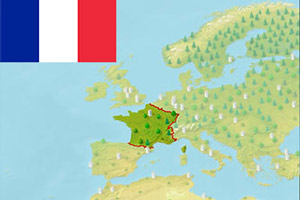
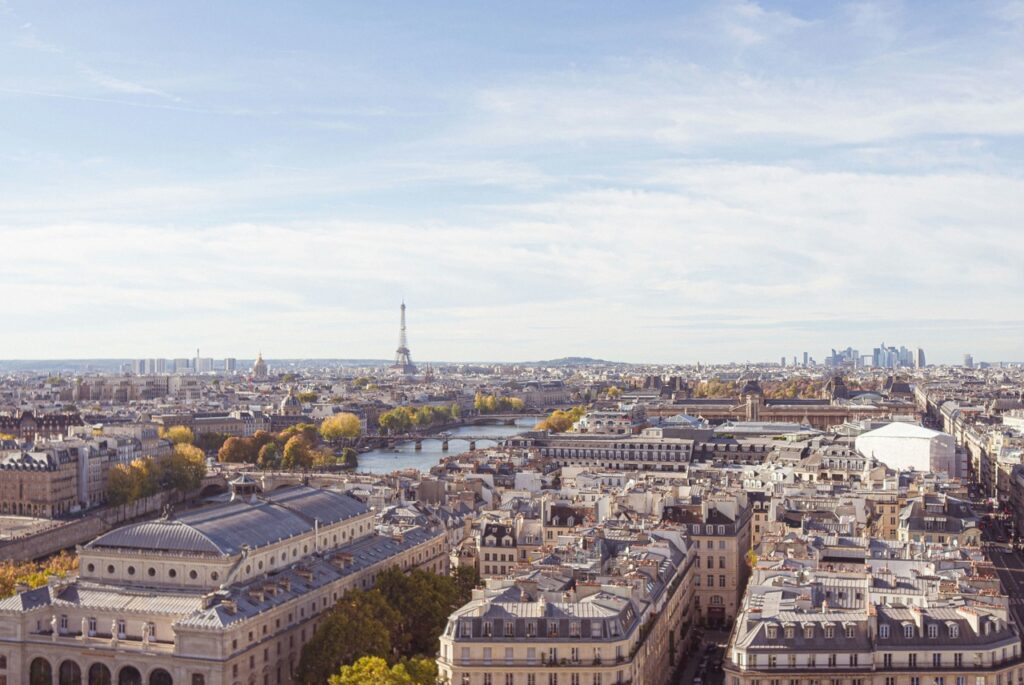
Paris
Paris, the capital of France, is a global center for art, fashion, gastronomy, and culture, famed for its landmarks such as the Eiffel Tower, the Louvre Museum, and Notre-Dame Cathedral, as well as its charming streets, historic architecture, and vibrant café culture.
Photo by Dimitri Iakymuk on Unsplash

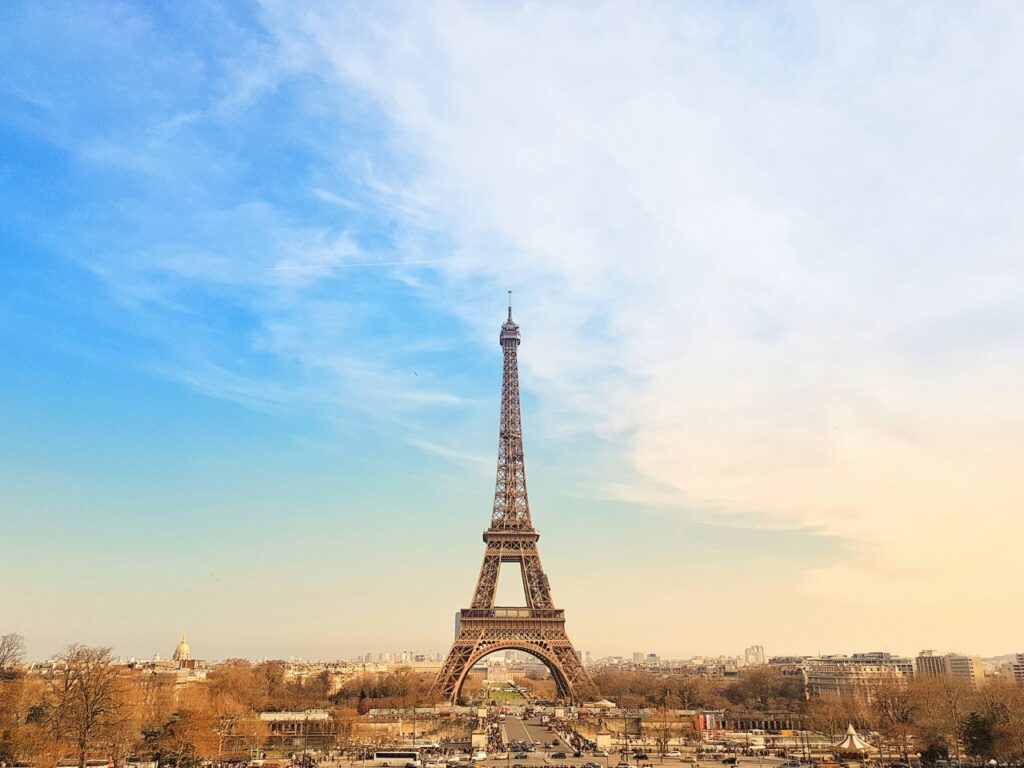
Eiffel Tower
The Eiffel Tower, an iconic wrought-iron lattice tower in Paris, France, was completed in 1889 as the entrance arch to the 1889 World’s Fair and stands as one of the most recognizable structures in the world, attracting millions of visitors annually.
Photo by Jeevan Jose on Unsplash
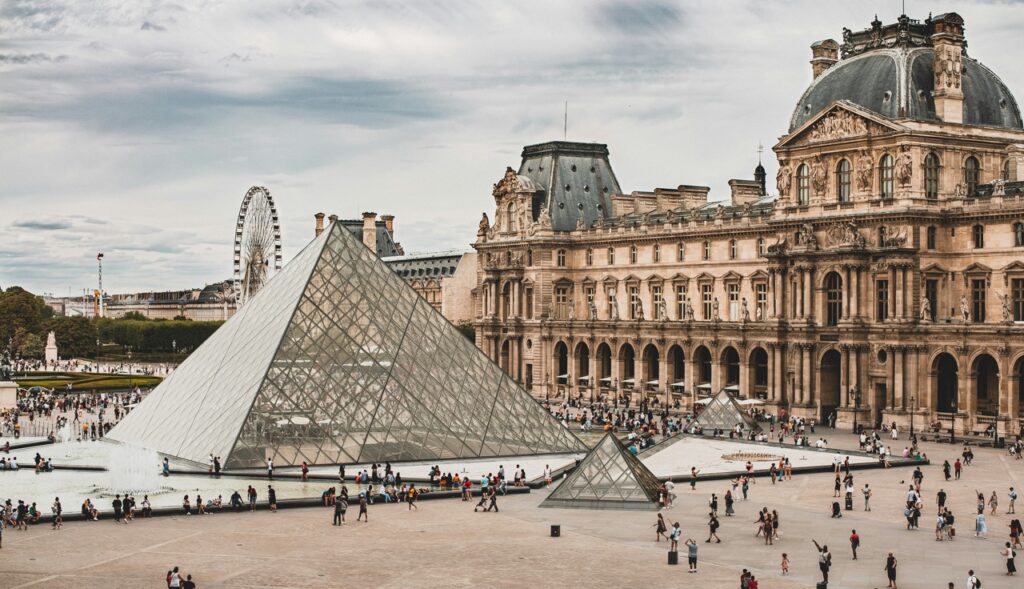
Louvre
The Louvre, located in Paris, France, is the world’s largest art museum and a historic monument, housing an extensive collection of artworks, including the Mona Lisa, within its iconic glass pyramid entrance and vast, historic palace.
Photo by Mika Baumeister on Unsplash
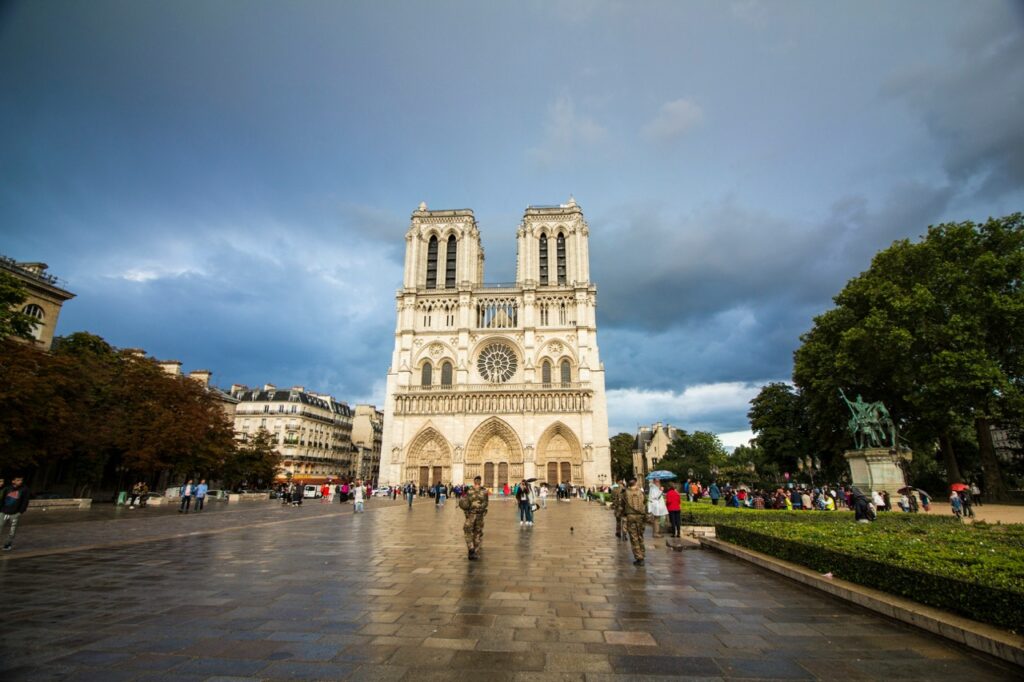
Notre-Dame de Paris
This masterpiece of French Gothic architecture is situated on the Île de la Cité in the very historical heart of Paris. Famous for its magnificent rose windows, flying buttresses, and intimidating stone gargoyles, the cathedral took nearly 200 years to complete. Despite a devastating fire in 2019, it remains a profound symbol of French history and resilience as it undergoes massive restoration.
Photo by Paul Steiner on Unsplash
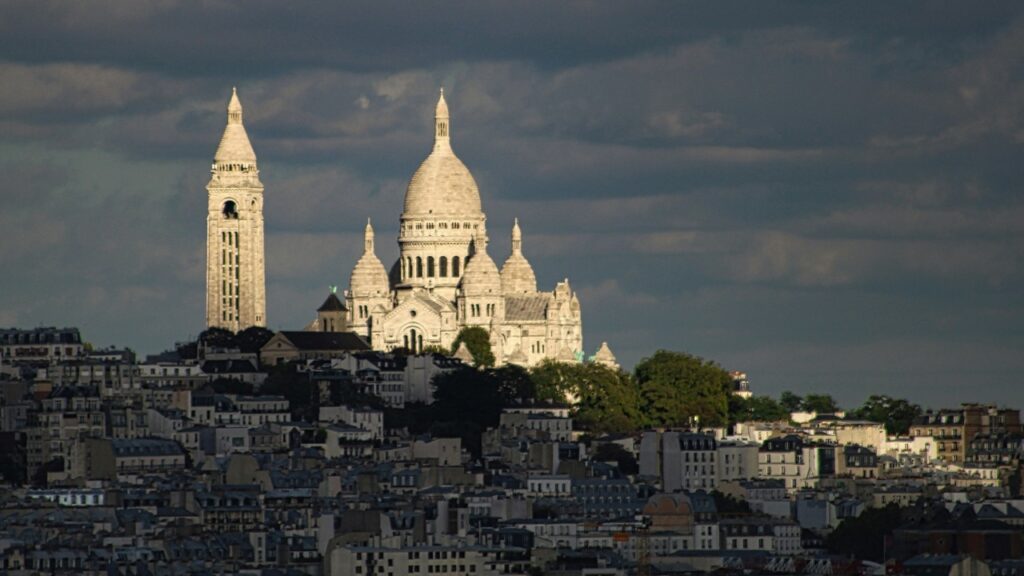
Sacré-Cœur Basilica
Perched at the highest point of the city on the hill of Montmartre, this gleaming white Roman Catholic basilica offers breathtaking views of Paris. It was consecrated in 1919 and features a stunning Romano-Byzantine design that heavily contrasts with the Gothic style typical of the city. The surrounding Montmartre neighborhood remains famous for its bohemian history, cobblestone streets, and lively artists’ square.
Photo by Carmen Keuper on Unsplash
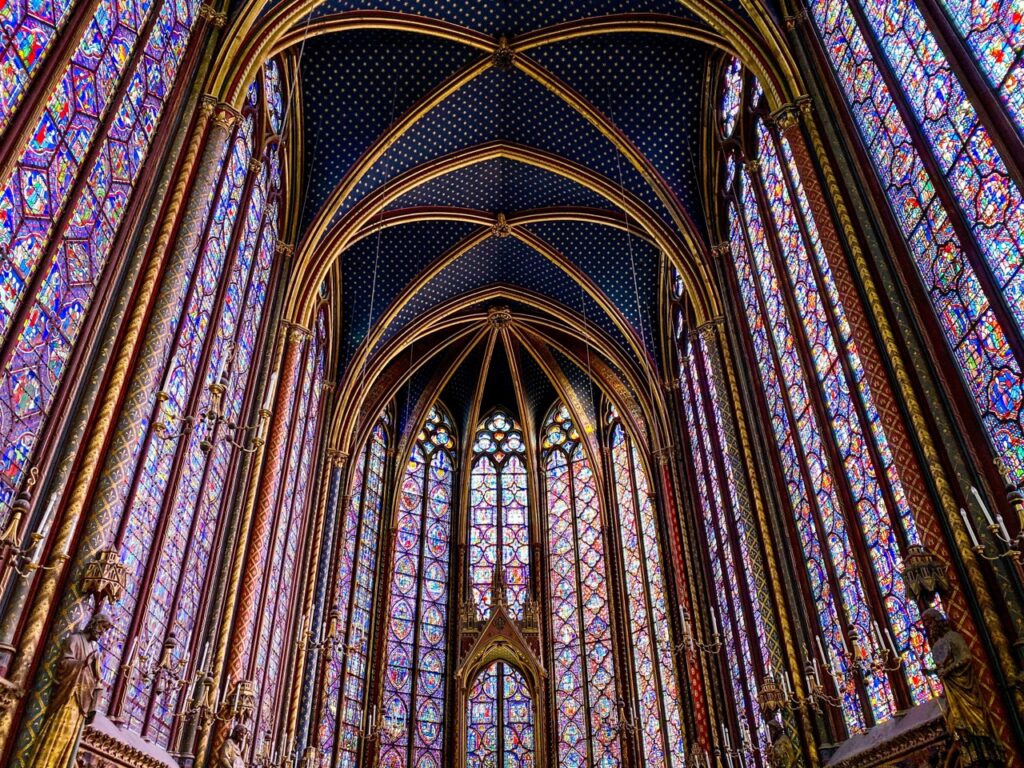
Sainte-Chapelle
Located within the medieval Palais de la Cité, this royal chapel was built in the 13th century by King Louis IX to house precious Christian relics. It is globally renowned for its breathtaking upper chapel, which features 15 massive stained-glass windows depicting over a thousand biblical scenes. The kaleidoscope of colorful light filtering through these windows makes it a spectacular masterpiece of Rayonnant Gothic architecture.
Photo by Bram Bakkers on Unsplash
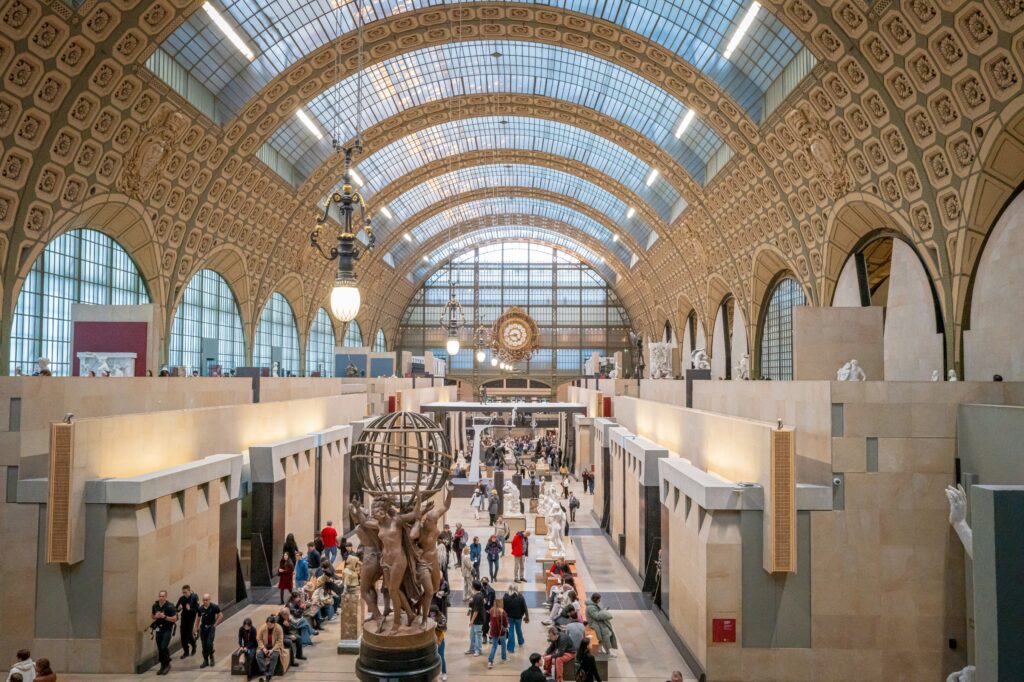
Musée d’Orsay
Originally built as a majestic Beaux-Arts railway station in 1900, this building was brilliantly transformed into a world-class art museum in 1986. It holds the largest collection of Impressionist and Post-Impressionist masterpieces in the world, including legendary works by Monet, Van Gogh, Degas, and Renoir. The museum perfectly bridges the historical gap between the classical art of the Louvre and the modern works found at the Pompidou Centre.
Photo by Sung Jin Cho on Unsplash
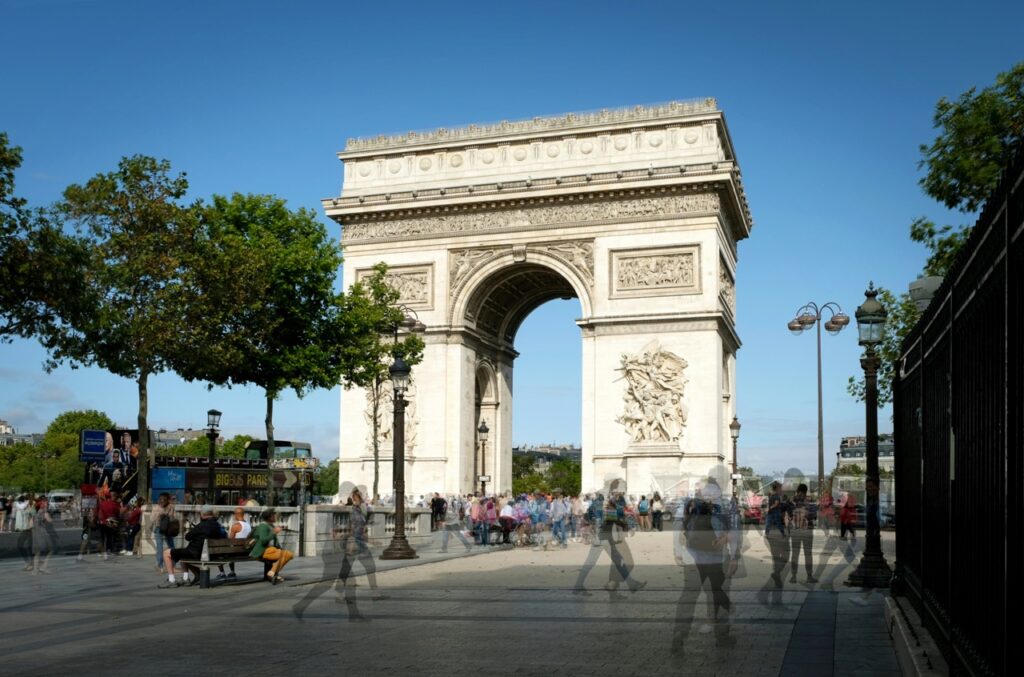
Avenue des Champs-Élysées
Often described as the world’s most beautiful avenue, this nearly two-kilometer-long boulevard runs from the Place de la Concorde to the Arc de Triomphe. It is renowned for its luxury boutiques, flagship stores, historic theaters, and traditional Parisian cafés. The avenue also serves as the traditional finish line for the Tour de France and the site of the annual Bastille Day military parade.
Photo by Howard Walsh on Unsplash
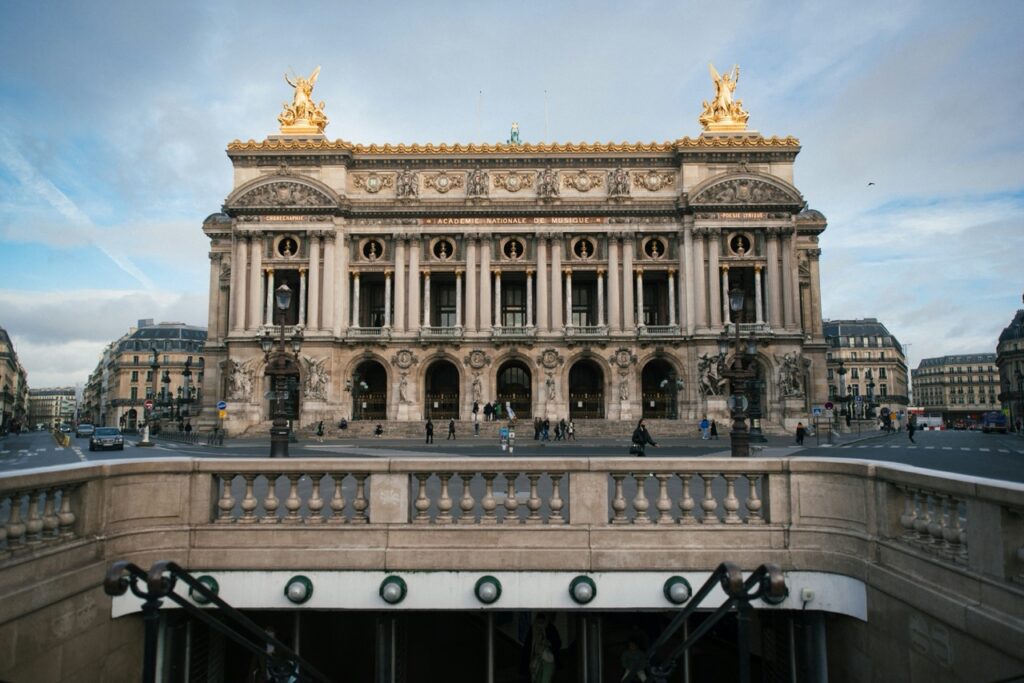
Palais Garnier
This opulent opera house was built in the late 19th century at the behest of Emperor Napoleon III and represents the height of Beaux-Arts architecture. Featuring a lavish grand staircase, intricate marble work, and a magnificent ceiling painted by Marc Chagall, it is a masterpiece of theatrical design. It famously served as the real-life inspiration and setting for Gaston Leroux’s classic novel, The Phantom of the Opera.
Photo by Francesco Zivoli on Unsplash
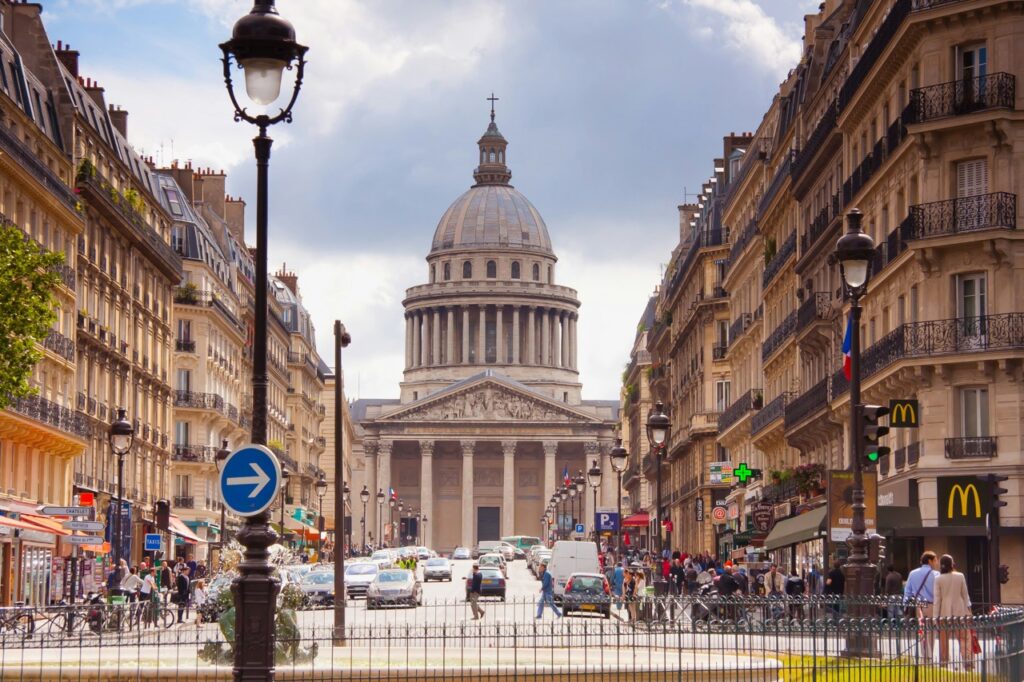
The Panthéon
Originally designed as a church dedicated to St. Genevieve, this neoclassical monument in the Latin Quarter was repurposed during the French Revolution into a secular mausoleum. Its impressive dome and grand façade were heavily inspired by the ancient Pantheon in Rome. Today, its crypt holds the remains of some of France’s most distinguished citizens, including Voltaire, Rousseau, Victor Hugo, and Marie Curie.
Photo by Linda Pomerantz Zhang on Unsplash
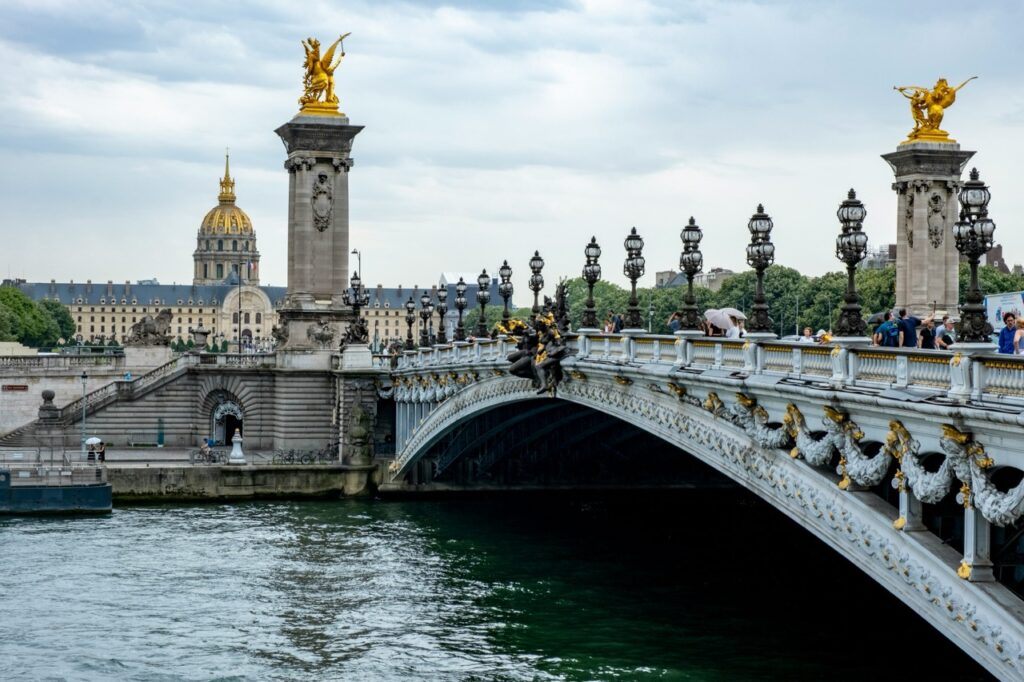
Pont Alexandre III
Widely considered the most ornate and extravagant bridge in Paris, Pont Alexandre III spans the Seine River to connect the Champs-Élysées quarter with the Invalides. It was inaugurated for the 1900 World’s Fair and named after the Russian Tsar to commemorate the Franco-Russian Alliance.
Photo by GHEORGHE LUPAN on Unsplash