

Tropical Rainforest
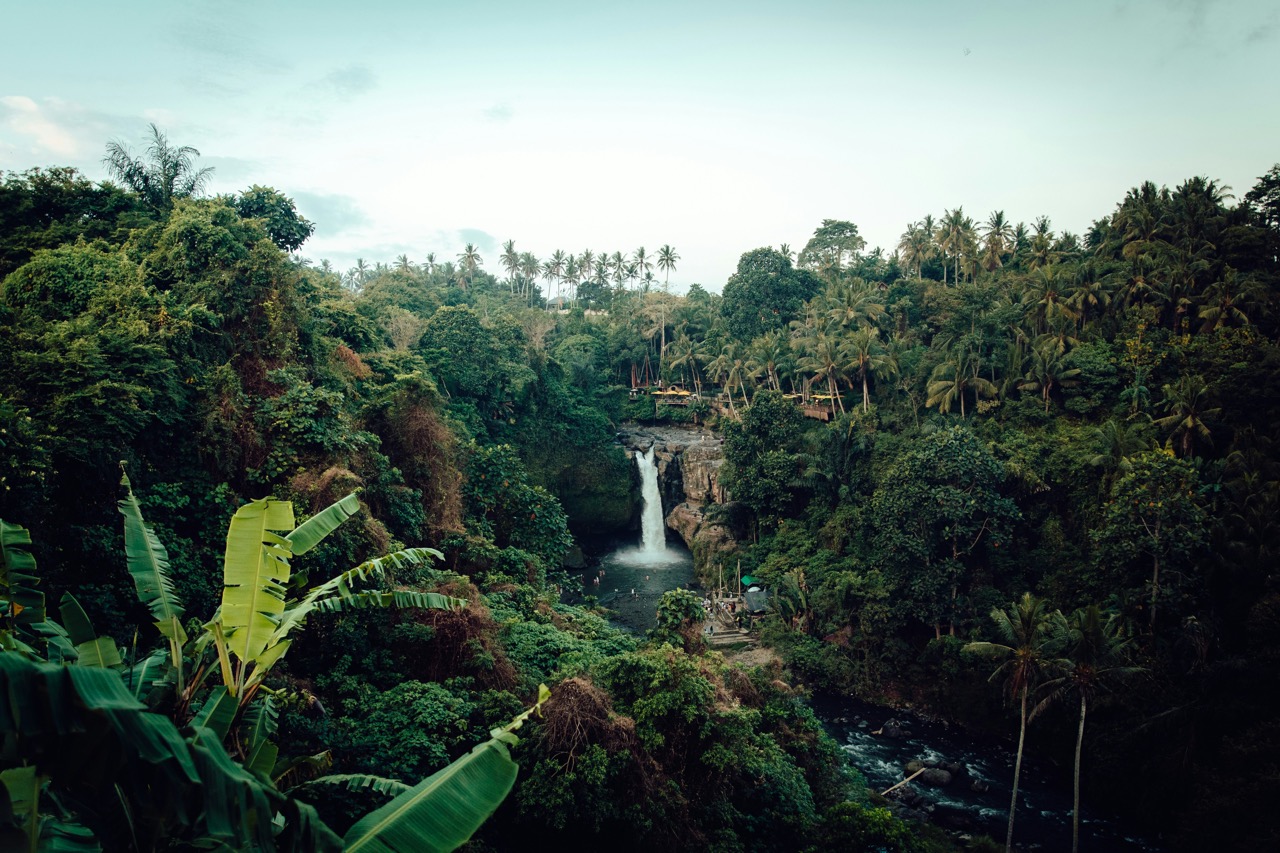
A tropical rainforest is a dense, biodiverse forest near the equator with high rainfall and humidity.
Illustration by Tomas Tuma

Musa
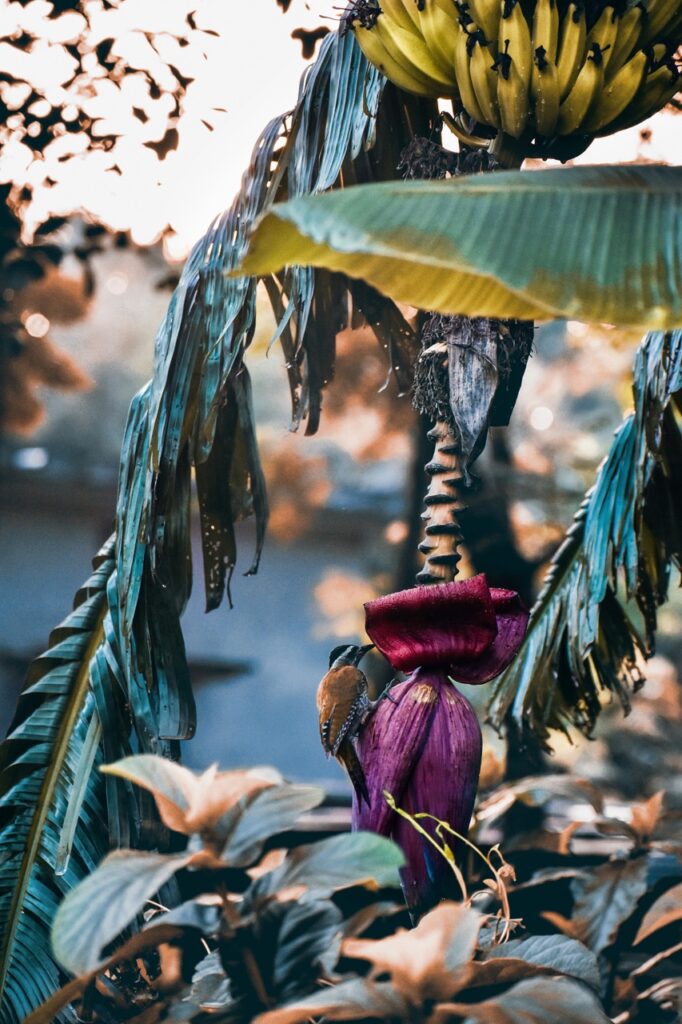
The banana tree, belonging to the genus Musa, is a fast-growing, herbaceous plant known for its large, broad leaves and clusters of nutritious fruit, thriving in tropical and subtropical climates.
Photo by Tarikul Raana on Unsplash
Life in Layers
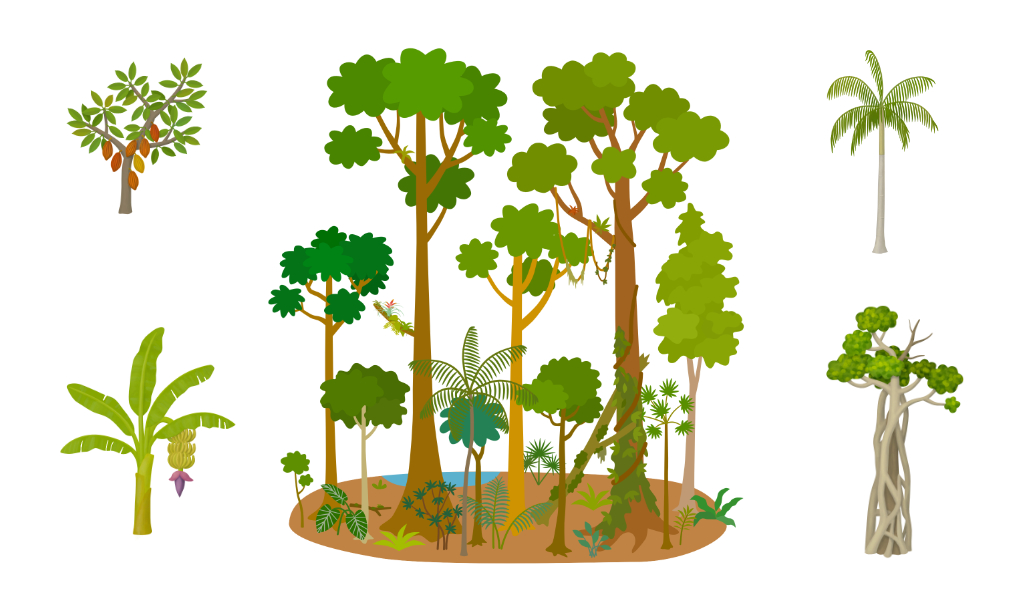
Height layers allow better utilization of available space for more animals and plants. The upper tree layer makes the best use of the energy from the sun’s rays. In the lower layers, light quickly diminishes, and plants must seek out bright spots, climb upwards, or have large leaves.
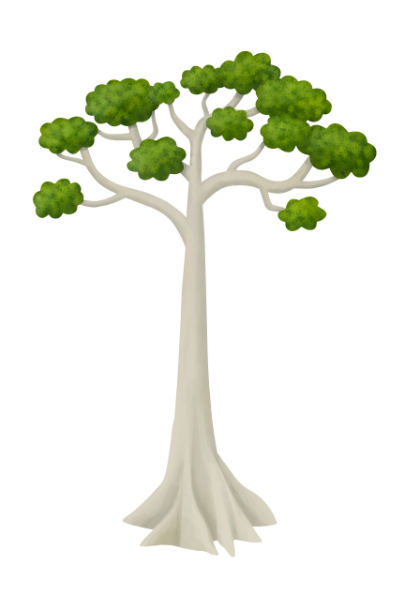
Kapok Tree
The massive trunks of the tallest trees in the tropical forest branch out into canopies high above the ground. The kapok tree grows up to 70 meters tall.
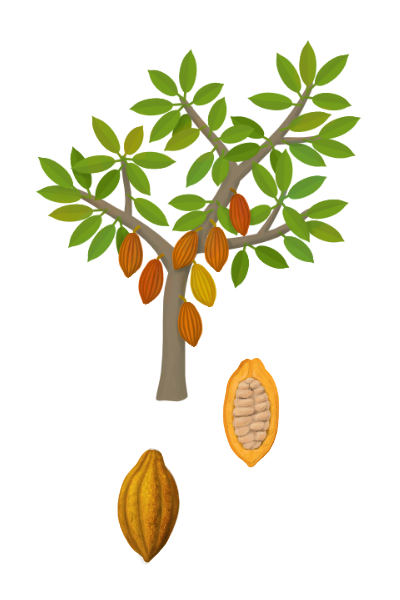
Cacao tree
The fruits of the cacao tree grow from strong branches or directly from the trunk. Inside the fruits are seeds known as cocoa beans.
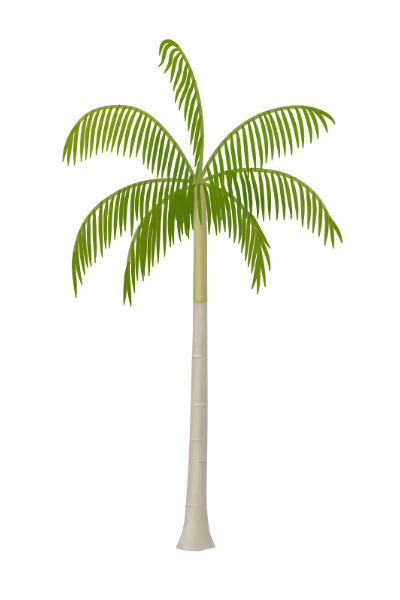
Palms
Tropical forests are home to many species of palms.
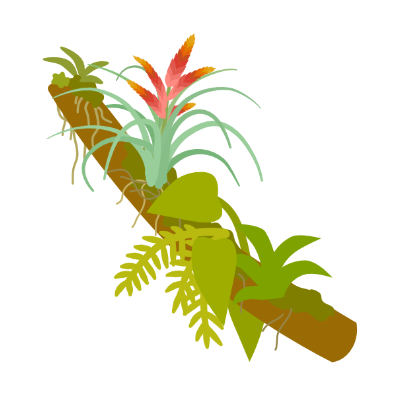
Epiphyte
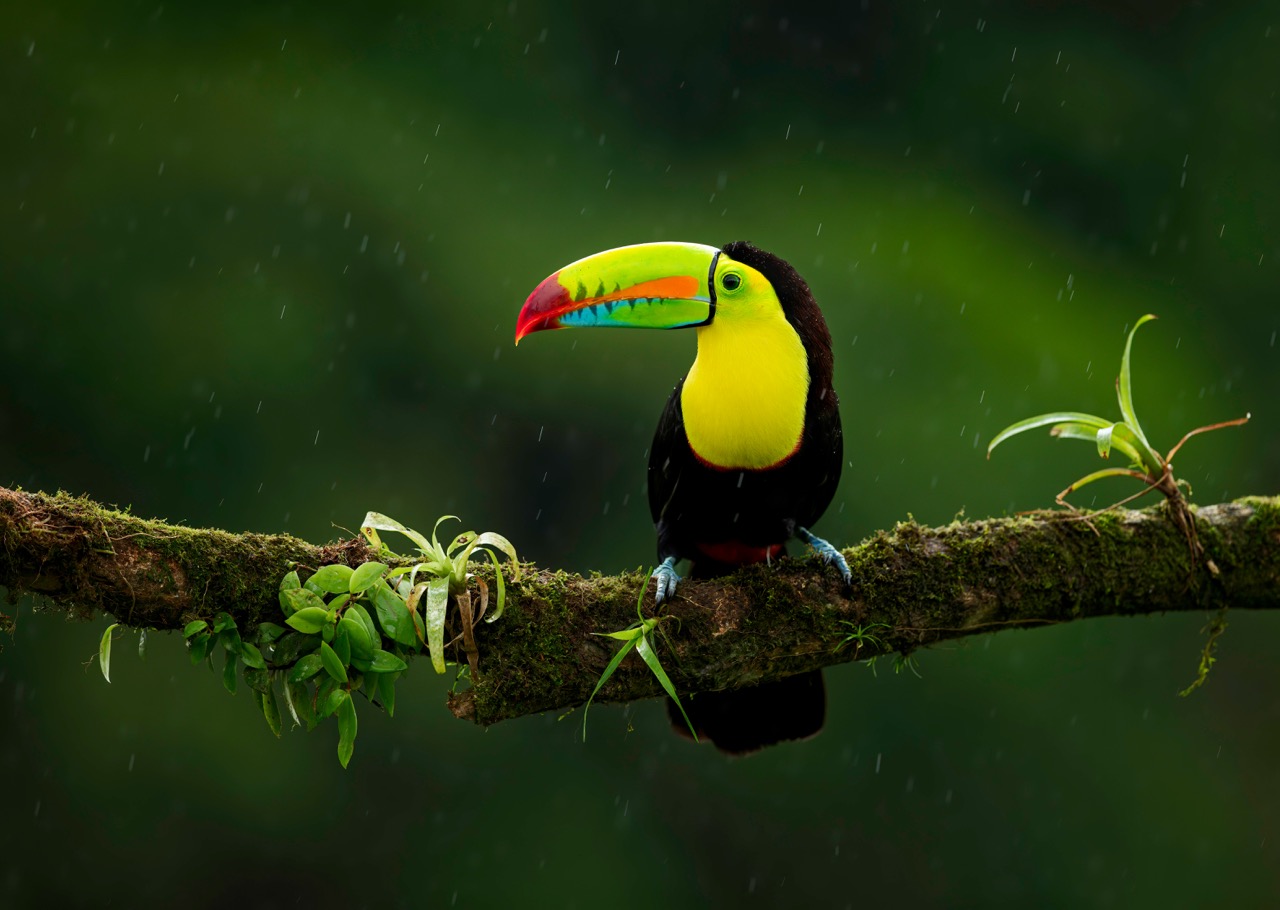
Epiphytic plants attach themselves to the branches of other plants. They obtain nutrients from their own roots and do not parasitize the host.
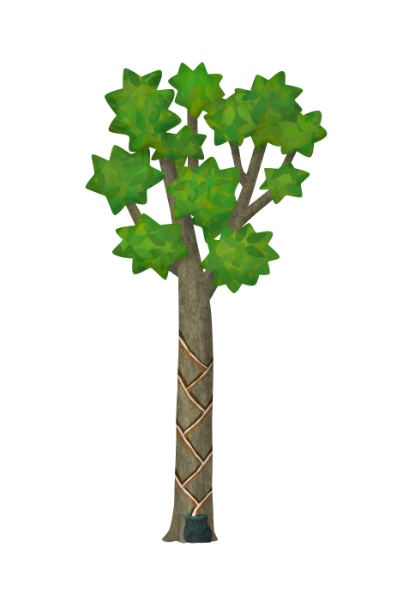
Sapodilla tree
The jungle is a great source of raw materials and inspiration for humans. Even the first manufactured chewing gums came from here. The raw material for them was latex sap flowing from the bark of the sapodilla tree.
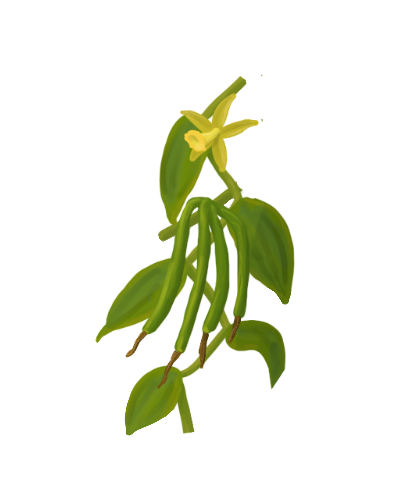
Vanilla
The fragrant spice comes from the pods of the vanilla orchid vine. It uses other plants for support and can grow to lengths of several tens of meters.